
Queer Social Capital: How LGBTQIA+ College Students Build Community and Belonging
In the current political climate of the United States, it does not need to be stated that LGBTQIA+ youth and emerging adults are politically targeted for their identities, whether they present as visibly queer or not. Negative portrayals of queer individuals in popular media have led to countless negative mental and physical health outcomes. Even in our little safe haven of San Francisco, I have found it increasingly difficult to find safety and a general sense of societal belonging.
This past year, my Emerson College peer Nathalie Arrua and I conducted a research study to put evidence to a theory we had: Is it possible that, at college, with the opportunity to be free as oneself, queer students may be presented with more opportunities for LGBTQIA+ community growth and acquisition? As queer college students ourselves, Nathalie and I considered this research crucial for understanding how and where college students are able to curate community in today’s political climate, and how these connections impact a person at this age.
What is queer social capital?
We based our research around the concept of social capital: the social “glue” that binds together individuals and societies. Social capital can be understood as the network of relationships, trust, and norms that allow communities to function, as well as to be seen as a cohesive community from an outside perspective. The value found in connections is social capital. Think about the way connections can lead to support for an individual or help them find resources or opportunities. For this study, we were looking very specifically at the social capital between queer people and their queer community, hereafter referred to as queer social capital.
We found a gap in previous studies centered around social capital, college students, and the queer community: identifying how queer college students find social capital in a mediated world, and how online connections factor into the glue that builds social capital.
What we wanted to understand
Nathalie and I sent a survey out to our immediate and more distant connections intending to understand how location influences social capital, and how that can be mediated by the medium being used, specifically in-person connections versus online connections, among queer college students. We had three hypotheses:
There would be an increase in social capital in college settings versus hometown settings.
Emerging queer adults (18–24 years old) would report experiencing more social capital offline compared to online in college.
Emerging queer adults (18–24 years old) would report experiencing more social capital online compared to offline in their hometown.
How we studied queer social capital
In order to determine the answers behind these hypotheses, we had our participants fill out a survey using the Internet Social Capital Scales and the Riverside Life Satisfaction Scale. The goal of these two scales was to determine whether queer college students believe the social capital they possess changes based on their physical location, whether they are at home or at school, and how those connections change in online or offline contexts.
We added questions about life satisfaction and self-esteem to see if there were any additional connections between those factors and social capital. Do you gain life satisfaction if you curate a larger community and have stronger community bonds? Does your self-esteem rise if you gain more connections?
What we found
The results of our survey were fascinating: there was indeed an interaction between location and social capital moderated by media context, which supported our first two hypotheses, but our third was not supported.
Participants felt they had more queer social capital in general in a college setting than in their hometown.
Participants strongly indicated that they felt they had more queer social capital offline than online in a college setting.
Participants did not significantly indicate that they felt they possessed more queer social capital online than offline in a hometown setting. In fact, they suggested the opposite: they felt more queer social capital offline in both settings.
Those who filled out our survey indicated that they had the most queer social capital in offline college settings.
This was curious to me. Throughout my young adulthood, I have believed that online communities have somewhat overtaken offline communities for young people as a response to the desire for more connection in a heavily mediated world. People want more connections, so they go online. Previous research has indicated that this has led to online communities taking precedence over offline spaces.
As social media and online spaces have proven themselves to be hugely affirming for queer youth, we expected the role of medium in hometown settings to be much higher than it was. Personally, my assumption was that if young queer individuals can’t find support at home or school, they would find a conceivable replacement in online communities.
Though this may still be a reality for some, our results reported that offline queer social capital and online queer social capital in a hometown setting were not different enough to be significant.
Why college environments matter
Demonstrating the positive outcomes of social capital, previous studies have shown that offline connections with social support were associated with increased resilience against problems one might face in life and increased life satisfaction. Our study expands this understanding by indicating that college environments are incredibly unique spaces that foster the ability for social connection, especially compared to queer students’ social networks in their hometowns.
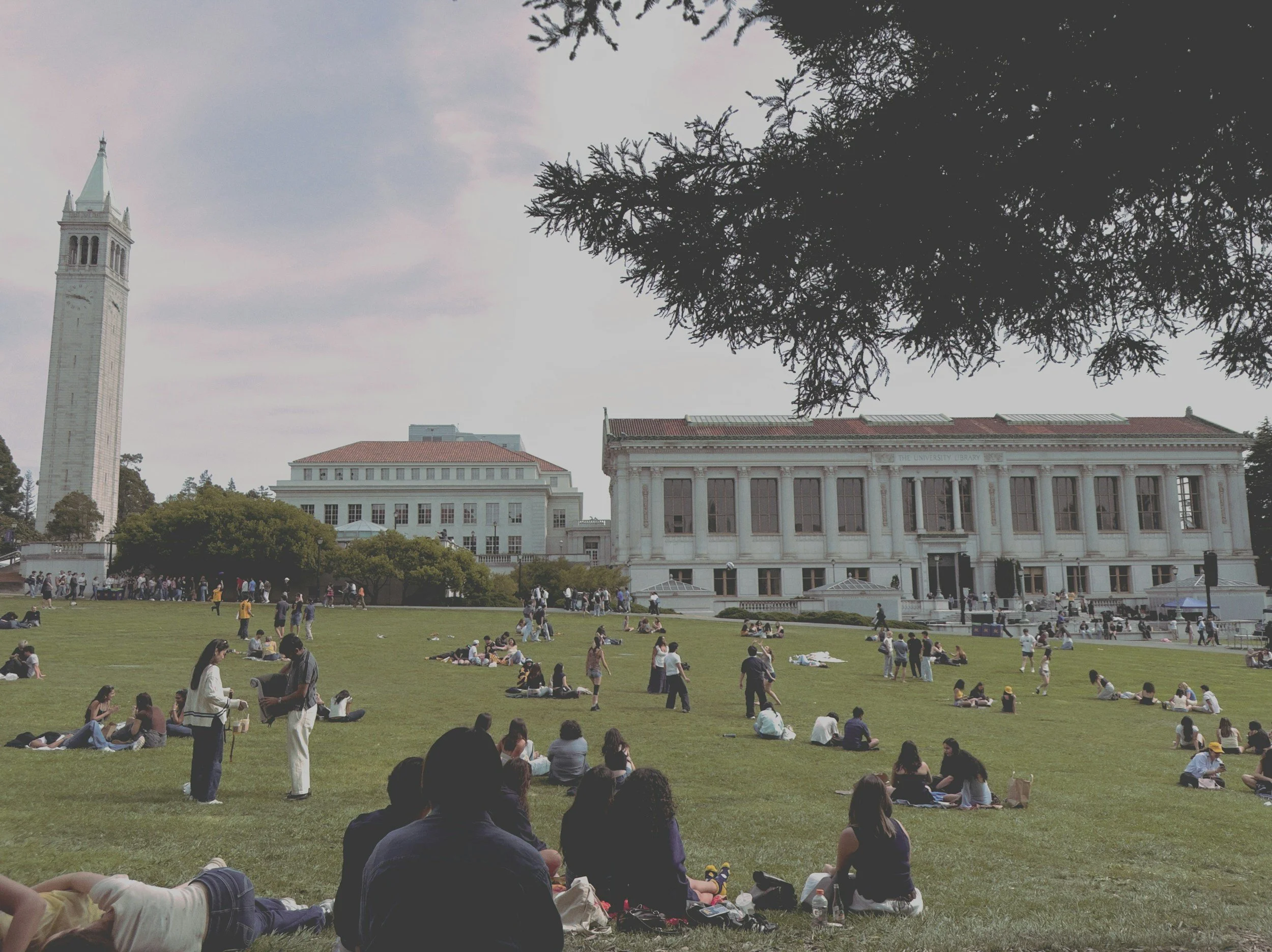
It is a part of the college experience to engage in spaces specifically designed to strengthen bonds: clubs, organizations, cultural meetings, and more. The Theory of Social Support suggests that the exchange of resources within relationships, specifically informational support and emotional support, can help individuals cope and enhance a sense of belonging and self-worth.
A college environment, typically equipped with various departments and organizations dedicated to community well-being and emotional empowerment, connects students with other members of their community through shared interests. This increase in dedicated shared spaces contributed to why college environments generally provided queer students with more social capital.
What does this mean for queer young adults?
Now that we’re past all the data reporting, what does this actually mean for today’s queer young adult population?
There is a significant interaction between place, hometown versus college, and medium, online versus offline, in the amount of queer social capital one possesses. This matters because of how hugely important community is for queer individuals, how college settings generally provide increased social connection, and the growing potential of online spaces to provide alternative community opportunities for individuals.
A sense of community and belonging is intuitively essential for human connection and individual well-being. For those who are part of a minority group, the presence of community is increasingly important in helping navigate societal oppression and othering. Social capital is not only the bonds within the group, but also the bonds between the group, its members, and those outside the group. A closer look at social capital shows bonds that are present both within and across communities.
If social capital is contextual, as understood based on our findings, then social capital might work in a more dynamic way. Individuals from marginalized groups may seek out spaces in which they have more access to social capital and community building. While we observed this in queer college students, future research may see this applying to other minority identities and other physical or mediated spaces.
The world is so complex for those with marginalized identities, so it stands to reason that accessing community may be a harder or lengthier process for some. Therefore, it is crucial to understand whether certain environments, such as college campuses, or mediated spaces, such as online communities, exist that may foster connections, and whether the bonds created there, this social capital, are a positive force in increasing subjective well-being, life satisfaction, self-esteem, or any other socially and mentally desirable outcomes.
Prioritizing face-to-face queer community
Despite all the progress we have made as a society in accepting people for who or what they are, existing as an out and queer person has been feeling more and more lonely.
Prioritize face-to-face interactions when deciding how to grow your community. Go to local queer-friendly establishments such as bars, clubs, or restaurants and make connections! If you have a hobby, like gaming, crafting, or anything else, make sure to stay up to date on local businesses, as they often host events specifically designed to build relationships.